Velcro, Velvet and the Four-Minute Warning: Notes From a Touring Wardrobe Wing
At 7.12pm on a wet Tuesday in Leeds, the stage manager calls the five-minute warning and the wing beside stage left turns into a pit lane. The musical is halfway through a 2026 UK tour, and the next costume change is not a scene change. It is a pit stop. A dresser stands by a folding table with a jacket opened like a book. An assistant stage manager holds a pair of shoes. The performer arrives at a jog, head down, arms already moving. Thirty seconds later, they are someone else and the show has not noticed.
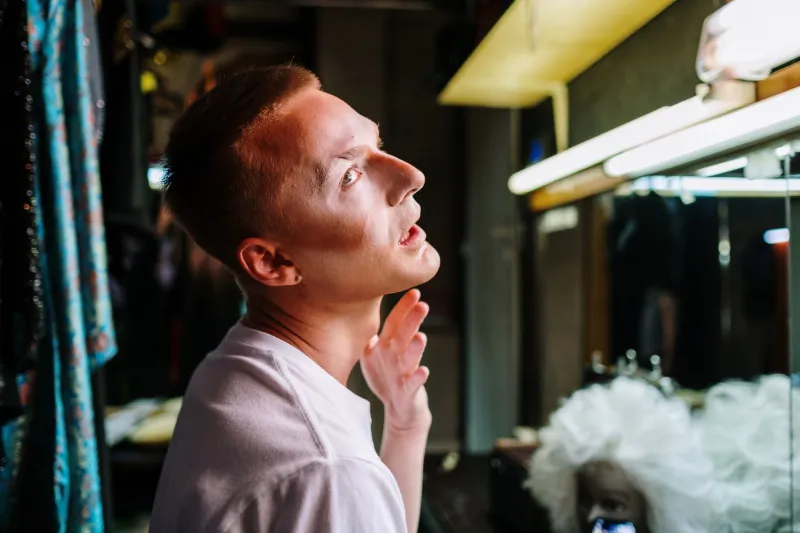
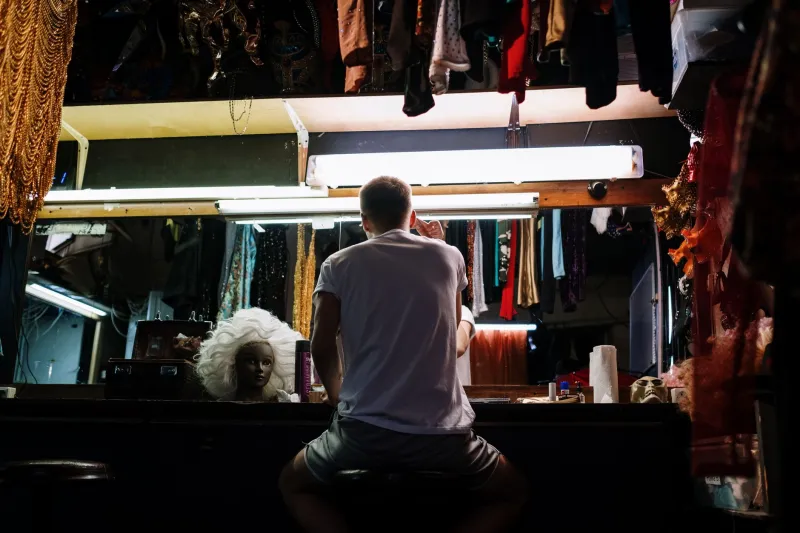
That is the first thing to understand about quick changes: the audience sees a flash, but the wing sees a relay. The so-called quick-change cupboard on this tour is not really a cupboard. It is a two-metre stretch of space between a fly bar and a fire exit, fitted with two rails, a mirror with a crack in one corner, a laundry bag and a laminated change plot. It travels from venue to venue in flight cases and rebuilds itself in whatever shape the theatre allows. In some places it is a proper corner. In others it is a curtained-off corridor beside the toilets. Either way, it is the most important room in the building for about four seconds at a time.
The cupboard is a route, not a room
Wardrobe teams do not talk about costumes in the abstract. They talk about routes. The route from the stage to the rail. The route from the rail to the mirror. The route from the mirror back to the wing. On load-in day, the wardrobe supervisor walks the quick-change path before the set is even finished. Where does the rail go? Can the mirror be seen in the dark? Is the torch taped to the table? Is there room for two dressers and one performer without anyone standing on a hem?
The answer changes with every theatre. A West End house might give you a dedicated quick-change room. A regional touring venue might give you a gap behind the proscenium and a helpful stagehand with a wind-up torch. The tour carries its own pop-up station, but the building always bends it into a new shape. In one venue the change happens behind a black wool curtain. In another, the performer has to walk down three steps and around a stack of flight cases. The route is rehearsed as carefully as any scene.
Thirty seconds, five pairs of hands
The change plot is the bible. It is a sheet of paper covered in arrows, timings and notes such as jacket off, sleeves inside out, wig check, shoes swapped, necklace on. It lives taped inside the lid of a costume case, and it is rewritten for every venue. The labels matter too. Every piece has a number, a name and a home. A missing glove is not a small problem. It is a hole in the relay.
The costumes themselves are engineered for speed. Poppers hide behind buttons. Magnets replace hooks. Zips are long enough to step into. Skirts have elastic waistbands that look tailored from the stalls. Some pieces are doubled, not because the performer needs a spare but because the laundry turnaround is tight and the show does not stop for drying time. Quick-dry fabrics, anti-static spray, stain pens and a sewing kit are all part of the kit.
Then there are the hands. A good quick-change team works like a pit crew that has learned to whisper. The dresser takes the jacket. The spotter checks the wig and the sightlines. The runner collects the discarded pieces and resets the rail. The performer keeps breathing, hits the mark and trusts that someone else is holding the sleeve. A nod means go. A raised finger means wait. A tap on the shoulder means turn. Nobody says the word panic, because panic is not on the change plot.
Packing a show into a flight case
Touring makes all of this harder. In a fixed theatre, the wardrobe team can build systems over months. On the road, they build them in a morning and take them down at night. The same quick-change cupboard has to work in a Victorian playhouse with a steep rake, a modern arts centre with no wing space and a receiving house where the stage door is also the route to the bar. The team carries labels, spare hangers, gaffer tape and a sense of humour.
The performers feel the pressure, but they are not the only ones. A quick change is a small act of trust between people who may have met that afternoon. The dresser has to read a body in motion. The performer has to surrender to a stranger's hands. The stage manager has to hold the cue. The audience has to believe that the character simply walked off and came back different. If it works, nobody notices. If it fails, everybody does.
What the wing knows
The unsung craft of the quick-change cupboard is not glamorous. It is logistics with a pulse. It is labelling, laundering, rehearsing and resetting. It is knowing that the second matinee on a Saturday is not the same as the first, because the costumes are damper and the performers are tireder and the wing is smaller than it was at the half-hour call. It is the quiet professionalism of making a transformation look inevitable.
What it reveals about regional theatre is simple: the magic is collaborative. The star may hold the spotlight, but the show holds together in the wings, where five people can turn a human being into another character in less time than it takes to boil a kettle. When the tour moves on, the cupboard is packed away and the labels go with it. The next venue gets a fresh route, a new change plot and the same promise. The story will continue. The wing will make sure of it.