The Table That Remembers: Life at a Regional Theatre's Prop Table
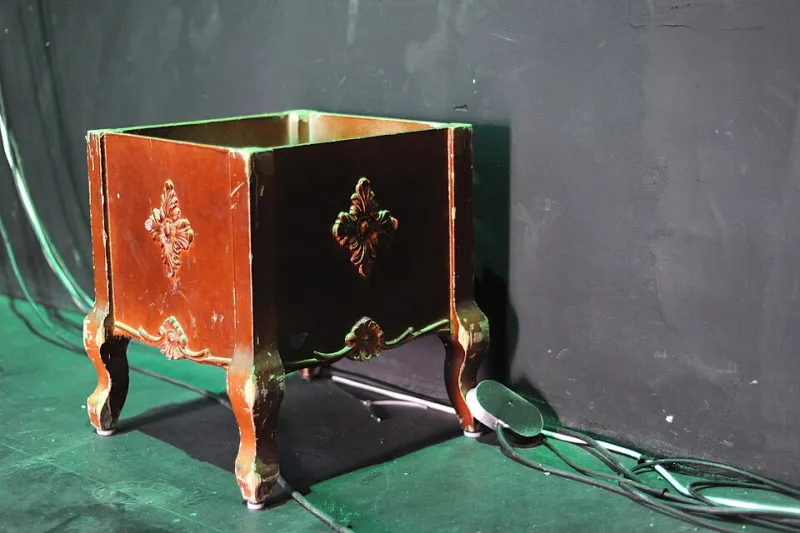
Photo: Guillaume Paumier, CC BY 3.0, via Wikimedia Commons
On a grey Tuesday morning in a regional producing house, the prop table looks like a jumble sale with a system. A trestle table sits against the rehearsal-room wall, covered in gaffer tape, photocopied lists and a mug that has lost its owner. There is a plastic crown, a folded letter, a fake pigeon and a half-eaten packet of digestives. To a visitor, it is clutter. To the stage management team, it is the show's memory.
This particular table belongs to a mid-scale touring production that opened in the autumn of 2026. It has been in the building for six weeks, and in that time it has become a character in its own right: moody, necessary, occasionally unreliable. The prop table is where the production's small decisions live. It is also where the panic lives, neatly labelled and stacked in a Really Useful Box.
The First Rehearsal: A Table with No Manners
The first prop table is always a rough draft. In week one, the stage manager spreads out a dust sheet and starts with the script, a pencil and a pile of sticky notes. Every mention of an object gets a line on a master list. Some entries are specific: 'Letter, sealed, cream, A5.' Others are optimistic: 'Sword, maybe?' The table fills up with stand-ins, borrowed items and things that may or may not survive contact with a director.
At this theatre, the prop maker works from a corner of the workshop and a shared spreadsheet. She labels everything twice: once on the object, once on the list. 'If it moves, it gets a label,' she says. 'If it doesn't move, it still gets a label.' The labels are colour-coded. Yellow for rehearsal props. White for performance props. Red for anything that must not leave the building. The system is not glamorous, but it works.
Labels, Backups and the Hero Prop
Every show has a hero prop. In this production, it is a small leather notebook that an actor carries on and off throughout the second half. The notebook has a history: it was made by the theatre's prop maker, aged by hand, and filled with pages of fake handwriting. It also has a backup. And a backup for the backup, which lives in a drawstring bag marked 'DO NOT TOUCH' in capital letters.
The hero prop is treated with a kind of respectful paranoia. The deputy stage manager checks it before every performance. The actor checks it too, usually twice. The prop table has a dedicated corner for it, a small tray lined with felt. 'You'd think it was a relic,' says the stage manager. 'But if that notebook goes missing, the show stops. That's the rule.'
Other objects are less precious but just as important. The consumables: tea bags, biscuits, fake blood, batteries. The quick-change items: a pair of gloves, a hat, a set of keys. The things that get lost: a ring, a pen, a single earring. Each has a home on the table, marked with tape. Each has a place in the show's rhythm.
The Week Before: Consumables and Quiet Panics
The week before opening, the table gets busy. It acquires a second tier, a set of small shelves and a laminated inventory. The stage management team runs a 'prop check' after every rehearsal, which is exactly what it sounds like: a slow walk through the list, item by item, with a clipboard and a rising sense of doom.
This is when the quiet panics happen. The fake pigeon has gone missing. The letter has been folded the wrong way. The sword is too heavy. The prop maker makes a B&Q run for a new hinge, a can of spray paint and a bag of sand. The stage manager adds three new lines to the list and crosses out two. The table absorbs it all.
'You learn to love the boring bits,' says the prop maker. 'The labels, the boxes, the backups. The audience never sees them. But they feel them. If an actor picks up a prop and it feels right, the whole scene settles. If it feels wrong, you can see it in their shoulders.'
Tech Week: The Table Gets a Personality
By tech week, the prop table has moved from the rehearsal room to the wings. It is now a backstage landmark. People lean on it, put their coffee on it, ask it for things. It has a name, usually something unprintable. It has a torch attached to it with a bit of string. It has a sign that says 'PLEASE DO NOT PUT YOUR BISCUITS ON THE HERO PROP.'
The table also becomes a social space. During long waits, actors gather around it. They swap stories, complain about the heat, and quietly check that their props are where they should be. The stage manager stands at the edge, watching the monitor and the table at the same time. 'It's like a little village,' she says. 'Everyone knows where everything is. Until they don't.'
Closing Night: What Gets Kept, What Gets Binned
On closing night, the table looks tired. The labels are curling. The biscuits are gone. The hero prop is in its bag, ready for the next venue or the archive. The prop maker walks around with a bin bag and a list of things to keep. Some objects go back to the workshop. Some go to the charity shop. Some go home with the actors, as souvenirs.
The table itself is folded up and wheeled away. It will be replaced by another table, in another rehearsal room, for another show. But for a few weeks, it was the centre of a small universe. It held the show together, one label at a time. And if you looked closely, you could see the whole production in it: the nerves, the jokes, the last-minute saves, the quiet pride of getting it right.